FAT32 vs exFAT: Recovery Differences
Both FAT32 and exFAT are widely used on USB drives and SD cards, but they handle file storage very differently — which impacts recovery.
FAT32 Limitations
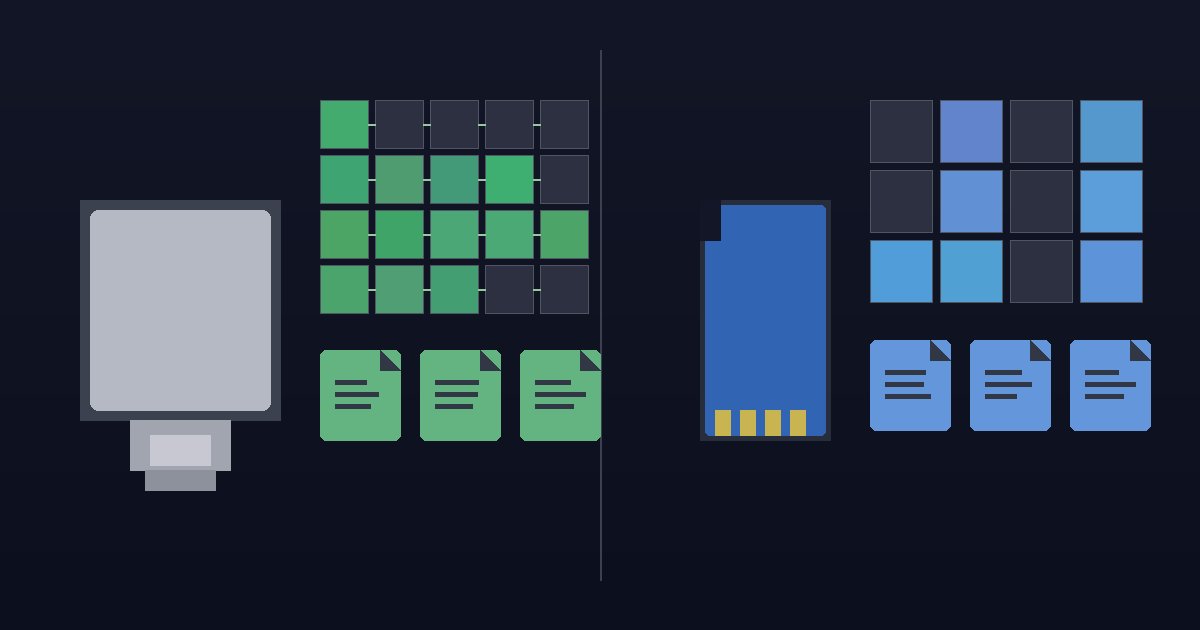
FAT32 has a 4 GB file size limit and uses a simple cluster chain. When files are deleted, the first character of the directory entry is replaced with 0xE5, but cluster chains may be overwritten.
exFAT Advantages
exFAT supports files larger than 4 GB and uses a bitmap-based allocation system. This can make recovery easier since the bitmap provides additional allocation information.
Recovery Success Rates
In our testing, exFAT drives generally yield higher recovery rates because the bitmap allocation table provides redundant metadata that helps reconstruct deleted files.